
Understanding Post-Traumatic Stress Disorder from a Lived Experience
- demelzahoneyborne
- Jun 18, 2023
- 4 min read
Updated: Jun 19, 2023
I returned to Liberia, West Africa, the scene of my trauma last December after being away for 22 years. It was fascinating how my people, amid all their pain and social and economic tribulations, got on with life, trying to stay alive for the next day. Liberians have become so good at hustling that they can sweet talk or guilt trip you out of your last penny.
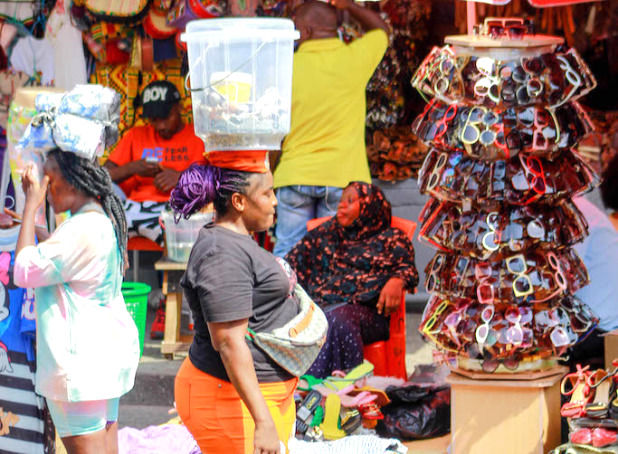
Copyright 2023 Demelza Honeyborne
Over the years, Liberians have become good at surviving, which makes me wonder whether the continuous struggles have helped build resilience or created more chronic mental health issues that may take many more years to heal.
While in Liberia, I encountered a group of people living on the streets and was warned to avoid them. However, it became apparent that these were a combination of drug and alcohol-dependent, homeless, and jobless individuals due to the country's social and economic issues and the ex-child soldiers that are now adults left behind by society; for these people, the war is continuous. The ex-child soldiers have taken residence on the streets and in the graveyards and have become the lepers of Liberia, forgotten, stigmatised, ridiculed and ostracised by the very people they once fought to protect.
On one occasion, I had a man around my age approach me in the street in Liberia, trying to convince me that during the war, he was great and respected but now cannot even get employment, and his family and the community have abandoned him, leaving him to search in trashcans and beg for food. These groups of people are labelled 'ZOGOES' (could be spelt incorrectly).
I did not doubt his greatness and being powerful during the war for a second; I, however, felt empathy and pity for the fact that he and many others like some of my classmates, who came to classes with guns during the war, were now abandoned by the very people who exploited and used their innocence in the killing of millions.
During the war in Liberia, I encountered a child soldier several times at the checkpoints but did not know him personally; he carried his dead brother's skull hanging from a chain around his neck. He said multiple times that he was made to kill his parents before joining the rebels, but his little brother died along the way, and he kept his skull. In recent years, I always wondered what became of him and, if he is alive, what is the state of his mental health. Thousands and thousands of very young boys and girls were given drugs and guns by the rebels and told to go and kill whoever opposed their agenda. Today Liberia is paying the price of a nation that is highly traumatised repeatedly inflicting pain on others because, as the saying reads, 'HURTING PEOPLE HURT PEOPLE'. The raping of girls and boys as little as three years old is high, and the mysterious killings of innocent people for political and human sacrifices are high with everyone trying to take what they believe is theirs. There have been reports of suicides with individuals sharing the victims' photos across social media platforms without regard for the victims or their families. The sheer audacity of doing so with no remorse or consideration for others proves that common human decency and mental health awareness are highly lacking.
How do I know this? These are publicly discussed on radio stations, newspapers in Liberia, and across social media platforms and also personal knowledge. All of this suggests that an urgent, significant overhaul of Liberia's mental health structure is needed.
Musisi & Kinyanda (2020) described how chronic mental health disorders are a major problem within African communities due to the continued political unrest, persecution, and lack of essential human needs that we in the West take so lightly. They recognised that most trauma-related mental health disorders, namely anxiety disorder, post-traumatic stress order and depression, in Africa are due to war conflicts. This paper is among many other good-intended kinds of research looking at war trauma in Africa and everything that is wrong with Africa, yet very little is being done to address these issues.
I and many others are the products of war-trauma Africa, where many are forgotten and left behind to survive. These ex-child soldiers/Zogoes are repeatedly subjected to horrific treatment because of their mental state and are made to live no better lives than wild dogs.
Fortunately for me, a victim of the war (not an ex-child soldier), since living in the UK since 2000, I have been able to seek help and come to an understanding of why I was aggressive and angry continuously, my nightmares, difficulty sleeping, unexplained guilt and shame, my avoiding anything scary or war-related, including films, emotional numbness, intense fatigued from overthinking, always on edge anticipating danger, overcompensating and over engaging in activities including volunteering to keep me occupied and having difficulties in interpersonal relationships just to name a few.
Does any of these sound familiar? All of these and many more were me, but over the years, with adequate help, I am working towards not just BETTER but a WHOLE and AWARE ME.
Let's make it our caution decision to collectively not just list the problems we see but to take initiative and make a difference. To heal a nation, it takes the collective actions of all.
Imagine as a community and family if:
We show understanding and loving support to our relatives
We don't label or abandon them
Avoid telling them to get on with it or get over it (as I have been told before)
Stop blaming them for their problems
Create a safe place
Please encourage them to seek help and treatment for PTSD
Remember, our relative's behaviour is the result of their illness
Discourage the use of self-medicated substances
(Ramsay, Gerada, Mars & Szmukler, 2001.)
Reference:
Mental Illness: A Handbook for Carers By George Szmukler, Rosalind Ramsay, Clai 9781853029349. (n.d.). EBay. Retrieved 18 June 2023, from https://www.ebay.co.uk/itm/123329354232
Musisi, S., & Kinyanda, E. (2020). Long-Term Impact of War, Civil War, and Persecution in Civilian Populations—Conflict and Post-Traumatic Stress in African Communities. Frontiers in Psychiatry, 11. https://www.frontiersin.org/articles/10.3389/fpsyt.2020.00020


Comments